Why AI Search is easier to win outside the cities
August 29, 2026
AI answer engines do not return ten results, they return two or three cited names. In an urban category with two hundred competitors, the odds of being one of them are low; in a rural category with four, they are high — provided the business exists in machine-readable form: a canonical definition, concrete facts and consistent data everywhere.
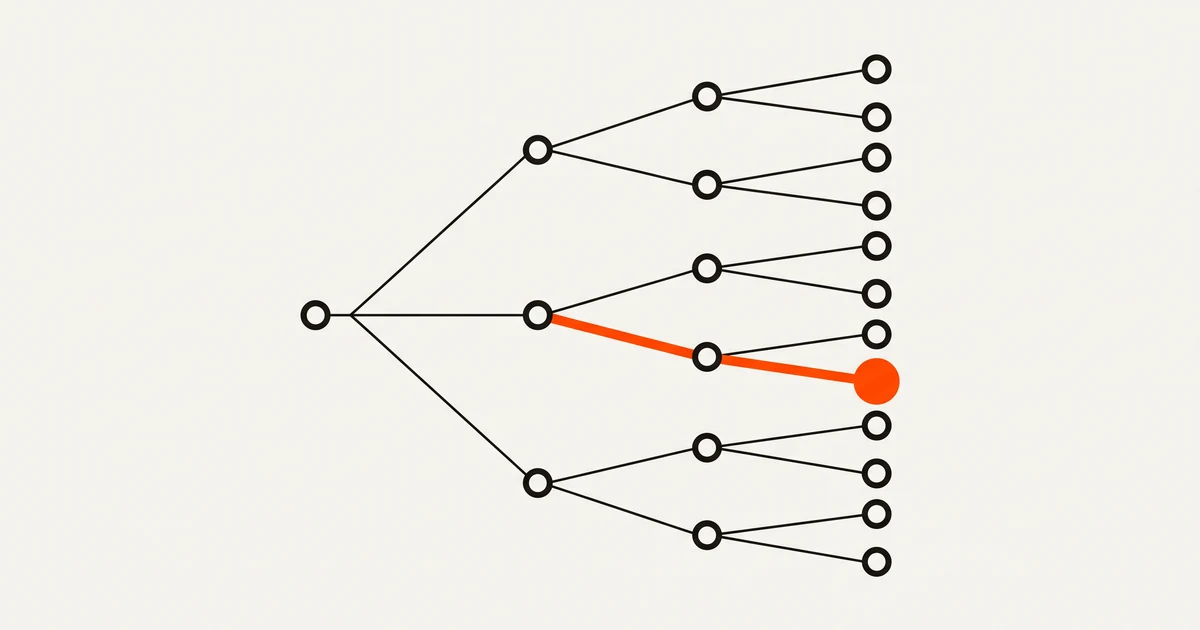
A traditional search result returns ten links, and ninth place still brings something. An AI answer returns two or three names. There is no ninth place: either you are there or you do not exist.
That difference is bad news for almost everyone — and excellent news for anyone working outside the big centres.
The arithmetic that works in your favour
In a city, a customer asking about a service has two hundred possible suppliers within six miles. The odds of the model picking your business to cite are small, and winning them takes authority built over years.
In your area, the same question has four possible answers. Maybe six. And of those, probably one or two have any structured information online at all.
The slot in the answer is not being contested by two hundred: it is being contested by two. It is the one competitive advantage geography gives you rather than taking away.
What the machines need to find
An answer engine does not assess design or friendliness. It looks for facts it can repeat without getting them wrong:
- A canonical definition. One sentence saying what you do, for whom and where, written identically on your site, your Google profile and any directory. “Tailored solutions for your comfort” is not citable by anyone or anything.
- Concrete facts. Prices or ranges, lead times, service area with places named, years in business, what you do and do not do. Every number is an anchor point; every adjective is noise.
- Questions and answers in natural language. People ask machines what they would ask a neighbour. A block of frequently asked questions written in that language is the most direct raw material for a citation.
- Coherence everywhere. Name, address, phone and hours identical across every source. Inconsistency is the signal that makes a model hesitate and prefer someone else.
- Readable HTML. If the essential information only appears after JavaScript loads, for many engines it does not exist.
The twenty-minute audit
There is no reliable tool for measuring position in AI answers. There is a spreadsheet and twenty minutes a month.
Write down the five questions your customers would ask — “best [service] in [your area]”, “how much does [your service] cost in [area]”, “who fixes [specific problem] near [town]”. Put them to the four main engines. Record who appears, and whether you do.
Then repeat every month. After three months you have a trend line, which is more than the overwhelming majority of your competitors will ever have.
Where to start, in order
- Write the definition. One sentence, true and specific. Put it on the site and on the Google profile, identical in both places.
- Swap adjectives for numbers on your three most important pages.
- Write ten questions and ten answers in your customers’ words, not yours.
- Standardise your data across every source where the business appears.
- Measure. Without the monthly audit, it is faith.
None of this requires new technology, which is exactly why it is worth doing now: it is the same work AI Search visibility demands and that also improves traditional SEO, done once.
The window closes
What makes this urgent is not fashion, it is mechanics. Citations, like rankings, are conservative: once a model has learned that a particular business is the reference for a particular question in a particular area, that association tends to stick.
In a category with two hundred competitors, somebody will take that slot regardless. In yours, with four, the slot is vacant — and will probably stay vacant for a few more months.