How to sell to the city when your business is out in the country
August 29, 2026
A rural business cannot rank in the Google map of a city where it has no address — and should not try. The route into the urban market is the opposite: organic content that answers intent, geo-targeted ads, and presence in AI answer engines, where physical distance is not a ranking factor.
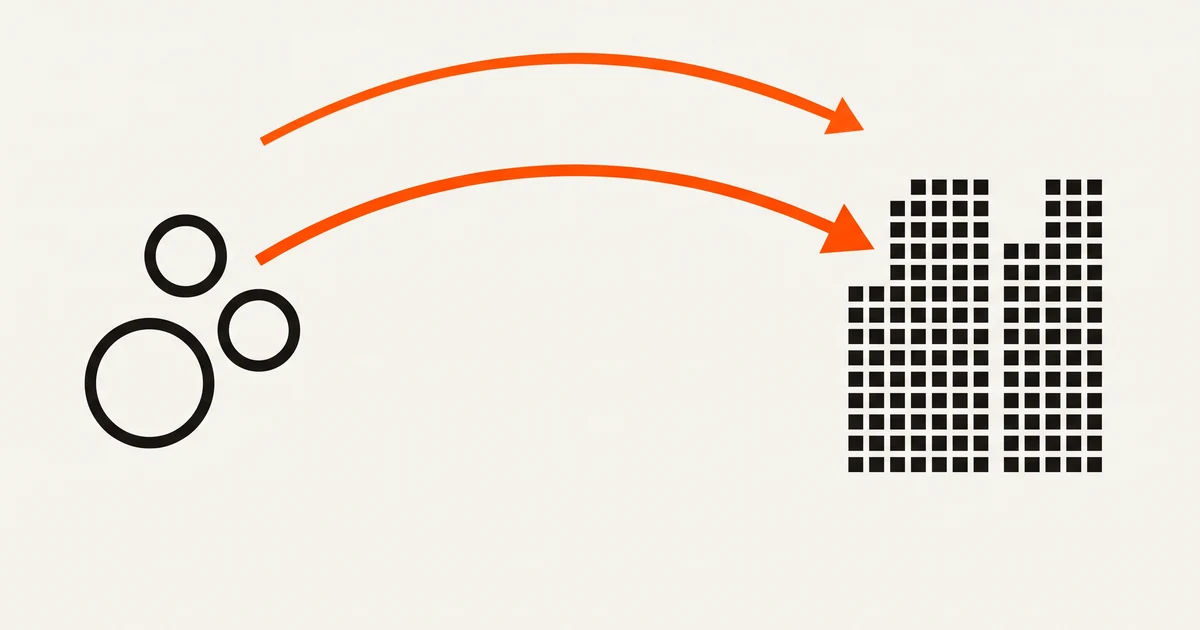
The market that would change your year is a hundred miles away. It has ten times the population, it pays better, and it has no idea you exist. The temptation is to solve this on the Google map — and that is where time, and sometimes the profile itself, gets lost.
Why the map is not the route
Google’s local results are ordered by proximity to the point of search. Without a verified address in the city, your business does not enter that map, however good it is. This is not a penalty, it is the mechanism.
The next temptation — renting a convenience address — is the most expensive mistake in the book. Addresses without a real physical presence get detected and suspended regularly, and the suspension does not stop at the fake listing: it takes the whole business with it, including the genuine profile back home, which takes weeks to recover.
The urban market is won through three doors that need no address at all.
Door 1: content that answers intent
City buyers search questions, not place names. “How much does”, “is it worth”, “what is the difference between”, “how to choose”. These searches carry no geographic component in ranking — they are won with the best answer, and the best answer can be written from a village.
It is slower than the map and it lasts longer: a page that genuinely answers a buying question keeps bringing customers years later.
Door 2: ads with a radius, not an address
Ad platforms let you choose exactly where you appear without asking where you are. You can show up within a six-mile radius of a city centre from your workshop in the hills.
Two practical rules. Always split the city campaign from the local one, because cost per click and conversion rates are completely different and, mixed together, they hide each other. And send the urban visitor to a page that talks about their city, not to the page that talks about your village.
Door 3: answer engines
When someone asks ChatGPT or Perplexity who does a certain kind of work, the answer is not ordered by distance — it is assembled from whoever is described clearly, consistently and verifiably. A rural business with a well-written definition and concrete published services competes on level terms with a capital-city firm. It is the only channel where geography does not weigh, and it is the cheapest to win right now, because almost nobody is contesting it.
The three models that work
Shipping. Products that travel well. What stops the purchase is almost always the same thing: undeclared delivery times and costs. A lead time written in days and a shipping cost visible before the basket beat any amount of brand copy.
Remote service. Accounting, design, consultancy, training, technical support. Distance stopped being an obstacle and the lower cost base became a competitive advantage you are allowed to state.
Concentrated travel. One or two days a week in the city, with the diary closed before you leave home. The rule that prevents losses: the trip gets booked when the jobs already booked pay for it.
Where you are from, as an argument rather than an apology
There is a wrong way to talk about location — apologising for it, hiding it, writing “we serve the whole country” without saying from where. And there is a right way: turning it into a reason. Lower overheads, a diary with real space in it, the person who answers is the person who does the work.
This only convinces with numbers beside it. “We are cheaper” persuades nobody; “the same job for 30% less because we pay no city-centre rent” persuades, because it can be checked.
The mistake of opening all three doors at once
A small business does not open three doors simultaneously. Pick one for the next six months — the one closest to what you already know how to do — and measure it properly. The other two will still be there next year.